 Business License

What Is the Difference Between an AC Condenser and a Radiator for BYD CHAZOR Parts Sourcing

An AC condenser and a radiator are both fin-and-tube heat exchangers at the front of a vehicle. Yet they belong to different circuits. The car AC condenser releases heat from pressurized refrigerant. This allows cabin air to be cooled. The radiator takes away heat carried by engine coolant. This keeps the powertrain within its designed temperature range. For BYD CHAZOR parts sourcing, confusing the two can lead to the wrong OE reference. It may cause unsuitable connections. It can also create a delayed repair.
What Is an AC Condenser and What Does an AC Condenser Do?
A car AC condenser receives hot, high-pressure refrigerant vapor from the compressor. Air moving through its fins removes heat. The refrigerant then changes to a high-pressure liquid. It continues to the expansion device and evaporator. That phase change gives the practical answer to what an ac condenser does. It is the A/C system’s heat-rejection component. It is not an engine-coolant tank.
How Does a Car AC Condenser Support Cabin Cooling?
The evaporator absorbs cabin heat. The compressor raises refrigerant pressure. The condenser releases that collected heat outside. Cooling performance depends on clean fins, adequate fan airflow, sealed refrigerant passages, and the correct refrigerant charge. A puncture can release refrigerant. Crushed or blocked fins can reduce heat transfer even when no obvious leak is visible.
Where Is the BYD CHAZOR AC Condenser Located?
The condenser normally sits ahead of the radiator. It meets incoming air first. Its forward position also exposes it to stones, dirt, insects, corrosion, and collision damage. Similar size and closely spaced fins explain why buyers may call either component a radiator. Position alone should never be the only identification method.
AC Condenser vs Radiator: What Is the Functional Difference?
The difference between a condenser and radiator starts with the fluid. A condenser carries refrigerant in a sealed, pressurized A/C loop. A radiator carries liquid coolant in the engine or powertrain thermal-management loop. Both transfer heat to ambient air. Yet their pressures, port designs, internal passages, and service procedures are not interchangeable.
| Comparison point | AC condenser | Radiator |
| System | Cabin air conditioning | Powertrain cooling |
| Working fluid | Refrigerant | Coolant mixture |
| Main job | Reject heat and condense refrigerant | Reject heat absorbed by coolant |
| Typical connections | Refrigerant line fittings | Upper and lower coolant hose connections |
| Common complaint | Weak or warm A/C output | High coolant temperature or overheating |
Why Do Condenser and Radiator Failures Produce Different Symptoms?
A leaking condenser usually causes refrigerant loss. This leads to gradually warmer vent air. A restricted condenser may produce weak cooling. This occurs especially at low road speed. It can also create unusually high A/C pressure. Radiator trouble more often appears as rising coolant temperature, coolant loss, warning messages, or overheating.
The condenser sits in front. A blocked condenser can also restrict air reaching the radiator. Shared airflow can therefore make two separate faults appear related.
Can the Same Cooling Fan Serve Both Heat Exchangers?
It depends on vehicle configuration. A common electric fan assembly may pull air through the condenser and radiator stack. A fan fault can reduce A/C performance. It can also affect powertrain cooling at idle.
The shared fan does not make the heat exchangers interchangeable. It only means airflow diagnosis should include the complete front cooling module.
How Can You Identify a BYD CHAZOR AC Condenser Correctly?
Start with the failed circuit. Then verify the physical part. A component connected to aluminum refrigerant lines with compact sealed fittings is the condenser. A component with larger coolant hose necks and tanks is the radiator.
Do not rely only on a customer description, translated part name, or a front-end photograph that hides the connections.
Which OE Numbers Distinguish the BYD CHAZOR Parts?
The project product data identifies the BYD CHAZOR AC condenser HA2HE-8105010A. The corresponding BYD CHAZOR radiator uses HA2HE-1301010.
These different prefixes and component descriptions are stronger sourcing evidence than appearance. The internal radiator-and-condenser list also classifies the two part types separately across vehicle applications. This reinforces that one category cannot substitute for the other.
What Vehicle Details Should Accompany an OE Reference?
Provide the VIN, model year, market, powertrain version, production date when available, and clear photos of the removed part. Photograph the label, line or hose connections, mounting tabs, sensor provisions, and full core.
Check dimensions only after confirming the part type. Two cores can look alike from the front while using different ports or brackets.
Which Inspection Checks Reduce Parts Sourcing Errors?
First, confirm the complaint. For poor A/C cooling, inspect condenser fins, refrigerant oil staining, line joints, fan operation, and system pressures with appropriate equipment. Refrigerant recovery and charging require trained service procedures.
For overheating, inspect coolant level only when safe. Then check for radiator leaks, blocked fins, damaged hoses, fan performance, and circulation faults.
How Should Buyers Assess Shipping and Installation Risk?
Thin aluminum fins bend easily. Misaligned brackets or damaged ports may prevent a sealed installation. Request protective packaging around the core, corners, hose necks, and refrigerant fittings.
On receipt, check the carton for impact. Compare the new component with the removed part. Keep ports capped until installation. Never pressure-test a condenser with an unsafe gas or improvise around refrigerant service rules.
Why Should the Front Cooling Stack Be Inspected as a Unit?
Impact that reaches one heat exchanger may bend the other or damage the fan shroud. Dirt trapped between the two cores can restrict airflow without being obvious from the grille.
Inspect spacing, mounts, fan blades, wiring, and adjacent lines before ordering. This broader check prevents a new condenser from being installed in front of an already restricted radiator, or the reverse.
How Does Trustar Verify Fitment Before Supply?
At Trustar, we treat the OE number as the starting point rather than the only proof of fitment. Our team compares vehicle details, original-part photos, port orientation, mounting points, and core configuration. Buyers can also review our auto parts catalogue when assembling a broader sourcing list.
For this application, our product records separate HA2HE-8105010A as the condenser and HA2HE-1301010 as the radiator. We ask customers to flag front-end damage and send images of both the removed component and surrounding module when identification is uncertain.
Trustar uses this evidence-led process to reduce avoidable returns, installation delays, and mixed-part quotations.
FAQ
Q: What Is an AC Condenser in a BYD CHAZOR?
A: It is the front heat exchanger in the vehicle’s air-conditioning circuit. It releases heat from high-pressure refrigerant and helps change the refrigerant from vapor to liquid before it continues through the A/C system.
Q: What Does an AC Condenser Do When the BYD CHAZOR Is Idling?
A: It still rejects refrigerant heat. It depends heavily on electric-fan airflow because road speed is low. Weak cooling at idle can involve blocked fins, fan operation, refrigerant charge, pressure-control issues, or another A/C fault. Diagnosis should precede replacement.
Q: What Is the AC Condenser vs Radiator Difference on a BYD CHAZOR?
A: The condenser serves the refrigerant circuit and cabin cooling. The radiator serves the coolant circuit and powertrain temperature control. Their fluids, ports, symptoms, OE numbers, and service methods differ even though both look like finned aluminum cores.
Q: Is the BYD CHAZOR AC Condenser Interchangeable With the Radiator?
A: No. The condenser reference is HA2HE-8105010A, while the radiator reference is HA2HE-1301010. Confirm the VIN, vehicle specification, connections, brackets, and removed-part markings before supply or installation.
Recently Posted
-
Golden Dragon Bus Spare Parts Part Number List
August 27, 2026Golden Dragon Bus Parts — Engineered for ReliabilityAs a trusted supplier of Golden Dragon Bus parts, we provide a comprehensive r Read More
 -
Zhongtong Bus Unveils All-New M6 Electric Minibus at 2026 Global Partners Conference in Vietnam
August 26, 2026Hanoi, Vietnam – July 22, 2026 – At the Shandong Heavy Industry Global Partners Conference and Green Intelligent Products Exhibiti Read More
 -
Yutong Launches All-New C11E Pure Electric Coach: 624 km Real-World Range on a Single Charge
August 26, 2026Huashan, China – August 20, 2026 – Yutong, a world-leading commercial vehicle manufacturer, unveiled its all-new C11E long-range p Read More
 -
Higer Buses Go Global: A 20-Year Story of Adaptation, Service & Trust
August 26, 2026Every morning, as the first light of the Andes sweeps over Santiago, Chile, red-and-white FENCER electric buses glide quietly thro Read More

Contact Us
Recommended Products
-
 Rear Tail Light NAMI01-05 for DONGFENG NAMMIUS$ 1MOQ: 1 Combo
 -
Crossbar Joint Assy 302YM-01545 for HIGER BUSUS$ 1MOQ: 1 Combo
-
Cone Roller Bearing 242VM-01569 for HIGER BUSUS$ 1MOQ: 1 Combo
-
Golden Dragon Yutong Bus Odometer Sensor LG901Q2-YT 1096208005-303US$ 1MOQ: 1 Combo
-
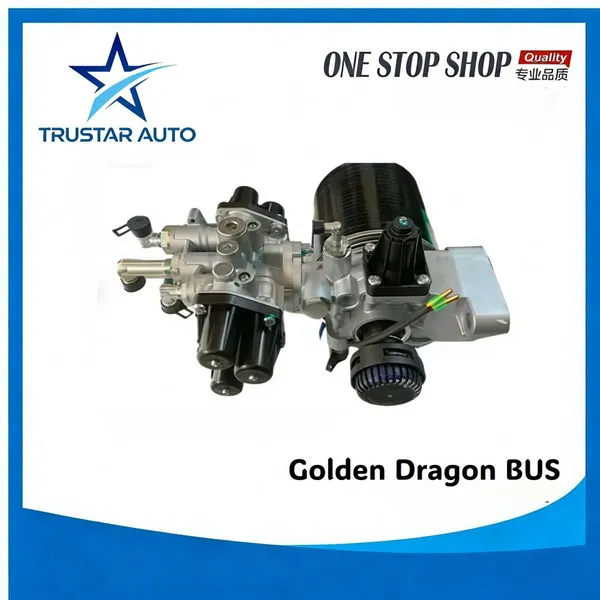
Premium Air Dryer Assembly With Six Circuit Protection Valve 35110071340 For Golden Dragon BusesUS$ 1MOQ: 1 Combo

-
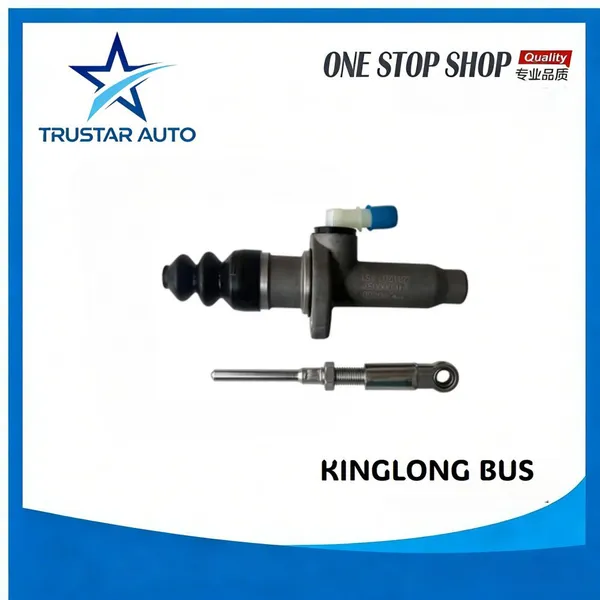
Kinglong Bus Clutch Master Cylinder 21600037 OEM ReplacementUS$ 1MOQ: 1 Combo
-
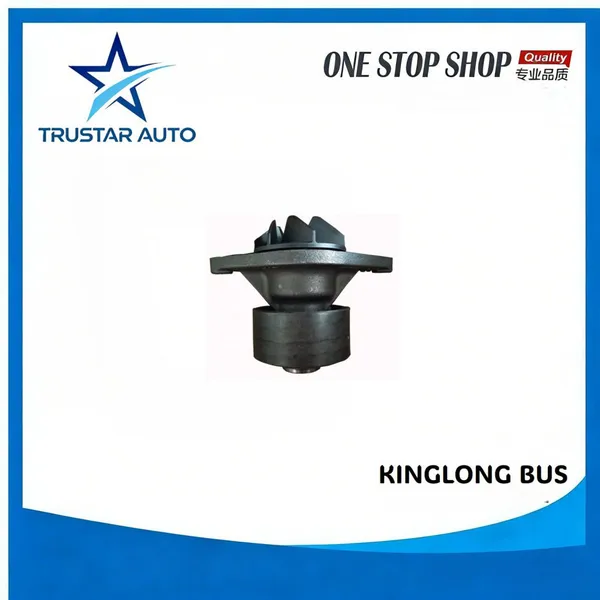
High-quality Water Pump for Kinglong Bus Accessories, Part Number 5473172US$ 1MOQ: 1 Combo
-
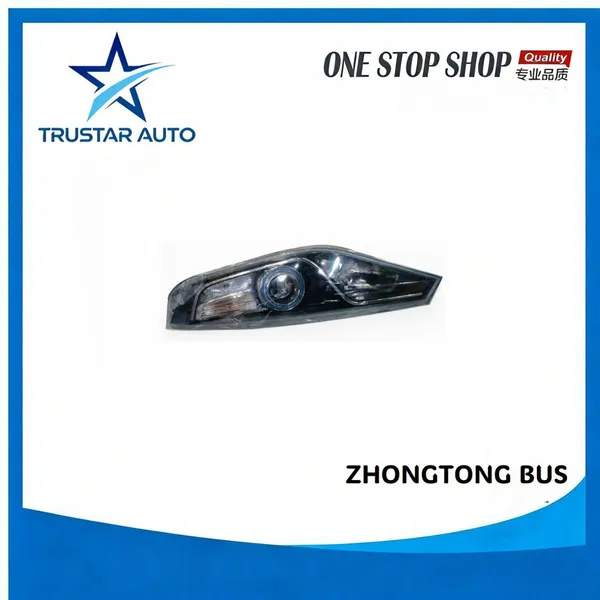
Lamp 4121-80-00405 for ZHONGTONGUS$ 1MOQ: 1 Combo
-
High-Quality Brake Disc for Zhongtong Bus Parts, Part Number 224001784US$ 1MOQ: 1 Combo
-
High-Quality Connecting Rod Bush for 6CT Engine, Yutong Bus, Part Number C3950661US$ 1MOQ: 1 Combo
-
High-Quality Alternator for Yutong Bus Spare Parts, Part Number 4942446US$ 1MOQ: 1 Combo
-
Right Front Door Assy F01-6101020-DY for CHERY JETOUR X70 IIUS$ 1MOQ: 1 Combo
-
High-quality Upper Control Arm (rear), Compatible With JETOUR DASHING, Part Number F01-2919110 F012919110US$ 1MOQ: 1 Combo
-
High-quality Clutch Assembly, Compatible With JETOUR X70, Part Number 1200037626US$ 1MOQ: 1 Combo
-
High-quality Electromagnetic Valve, for JETOUR X70, Part Number F01-1500052 F011500052US$ 1MOQ: 1 Combo
-
High-quality Front Shock Absorber (left), for JETOUR X70, Part Number F01-2905010JD F012905010JDUS$ 1MOQ: 1 Combo
-
High-quality Wiring Harness, for JETOUR X90, Part Number F01-1500056 F011500056US$ 1MOQ: 1 Combo
-
High-quality Steering Column With Intermediate Shaft, for JETOUR X90, Part Number F08-3404010FG F083404010FGUS$ 1MOQ: 1 Combo
-
High-quality Taillight (left), for JETOUR X90, Part Number F08-4433010 F084433010US$ 1MOQ: 1 Combo
-
DCT400 Transmission Valve Body For Hongqi H5 OE 1500010-B15US$ 1MOQ: 1 Combo